Start production-ready.
Not from scratch.
Choose your language. StackPilot chooses the production-minded path — framework, Docker, CI, Terraform, health checks, database and cloud foundations included.
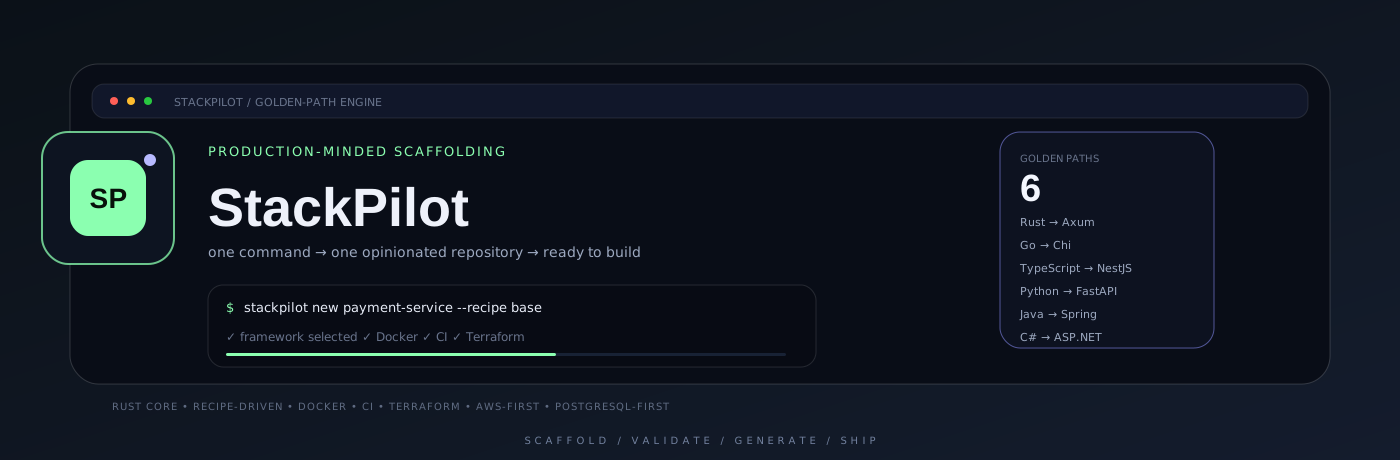
Built, tested and installable.
These are product facts we can verify today—not projected adoption numbers. StackPilot will add public usage metrics when there is enough real data to make them meaningful.
6
Rust, Go, TypeScript, Python, Java and C#
4
Windows, Linux, macOS Intel and macOS Apple Silicon
100
Versioned readiness-v1 across runtime, delivery, infrastructure, security and operability
v2
Preview-first upgrades preserve application source while managed foundations evolve
See the green path.
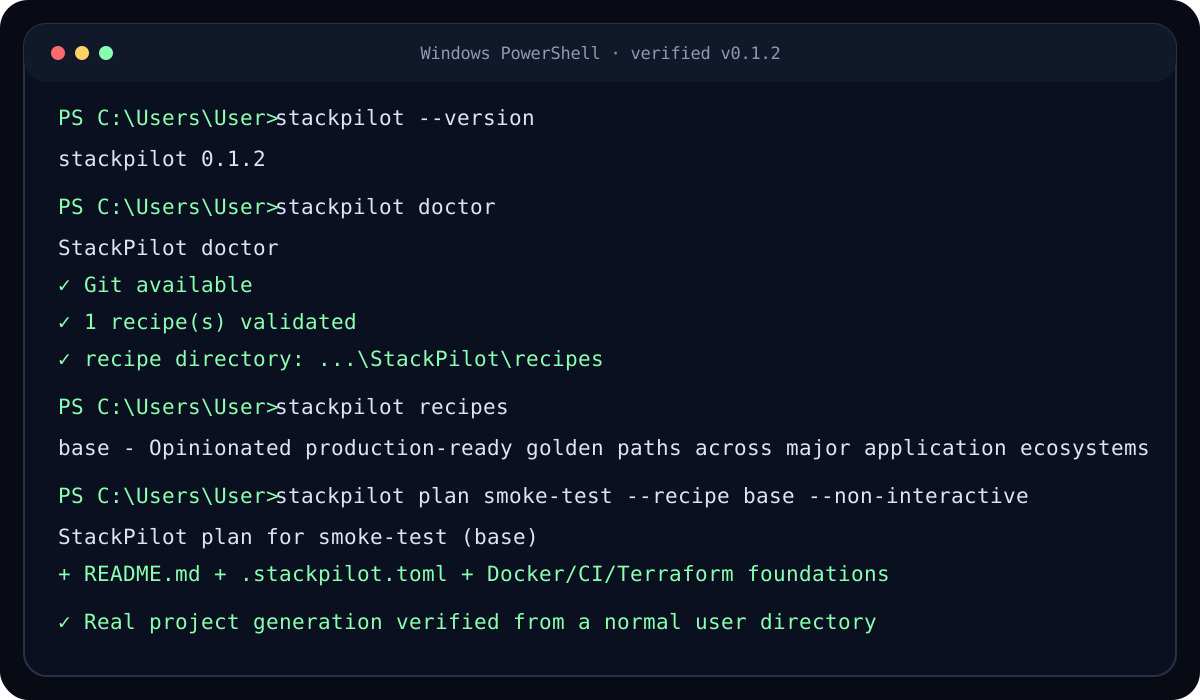
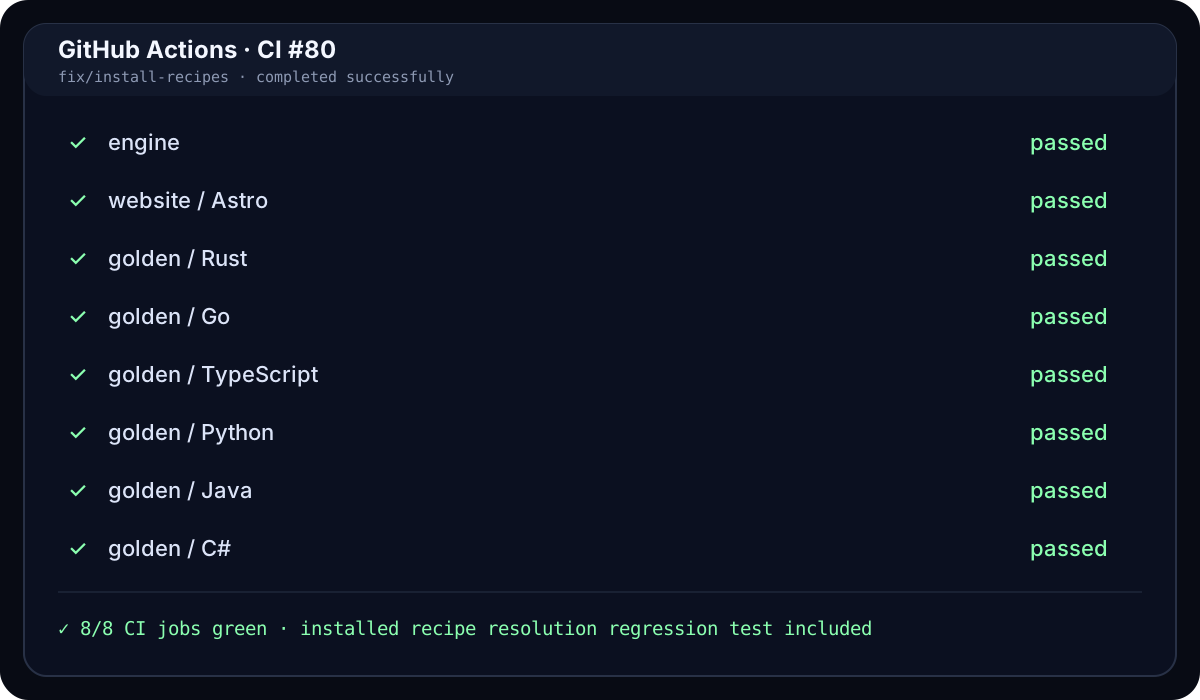
Release claims are backed by reproducible checks. These captures preserve the verified terminal result and the green CI run that covered the engine, website and every golden path.
One command. Then build.
The installer pulls the latest StackPilot binary and bundled recipe library for your platform. No Rust toolchain required.
curl -fsSL https://raw.githubusercontent.com/gODtECH-Ctl-Create/StackPilot/main/scripts/install.sh | bashWindows? See PowerShell installation →
One language. One blessed path.
StackPilot deliberately removes framework roulette. Each supported language gets one path we can test, improve and keep production-minded.
The boring production work is already there.
A generated service starts with the operational foundation teams normally bolt on days or weeks later.
Production container
Multi-stage Docker foundations and a consistent service contract.
GitHub Actions CI
Language-native build and test checks generated with the repository.
Terraform foundation
AWS-first infrastructure setup, with Azure and GCP available when needed.
PostgreSQL first
A deliberate default instead of making every developer solve the same database choice.
Health endpoint
A common /health contract on port 3000 across every golden path.
Engineering hygiene
Documentation, environment conventions, PR guidance and a persistent StackPilot profile.
Each release makes the first mile stronger.
We keep the public history concise: what capability each release established and how it moved StackPilot closer to a dependable developer tool.
Foundation
Established the StackPilot CLI, reusable recipe engine, planning and diagnostics, GitHub template bootstrap, and the six backend golden paths.
Release distribution
Standardized semantic release tags, native platform archives, checksums, installer diagnostics, and repeatable GitHub release publishing.
Install-ready runtime
Bundled the recipe library with installed binaries, added installed-path resolution and regression coverage, and completed real installed-runtime verification.
Repository engineering
Added deterministic repository inspection, readiness-v1 scoring, safety-first remediation, managed security foundations, AWS ECS/Fargate deployment intelligence, and golden-path v2 lifecycle upgrades.
Monorepo awareness
Field validation hardened nested-service inspection: repository-owned controls are inherited safely, invalid nested CI placement is prevented, and heterogeneous roots defer ambiguous StackPilot adoption.
Centralized container awareness
Nested services now recognize deterministic repository-centralized Dockerfile and Compose ownership, preventing duplicate container remediation and improving service readiness accuracy.
Shared gODtECH CLI identity
Adds the canonical gODtECH terminal identity to interactive StackPilot commands while preserving clean non-interactive, help, version, and automation output.
Repository-scope remediation safety
External FastAPI field validation hardened nested remediation so repository-owned environment findings remain visible but are deferred to repository scope instead of creating misleading service-local env files.
File-based configuration awareness
External Go/Chi field validation expanded configuration hygiene beyond dotenv: safe YAML, TOML and JSON example-plus-ignore conventions are now recognized without inventing .env remediation.
Rust advisory-scan awareness
External Rust/Axum field validation now recognizes cargo-deny advisory CI as dependency vulnerability scanning while keeping non-advisory cargo-deny checks from satisfying that control.
Latest verified milestone: v0.2.6, released 15 September 2026. Full release assets and notes are available on GitHub.
From idea to clean repository.
stackpilot plan to inspect exactly what will be generated.Build it. Keep it healthy. Govern the work.
StackPilot, gODtECH Steward and gODtECH FORGE are independent products with clear boundaries. StackPilot scaffolds, Steward maintains repository health, and FORGE orchestrates governed engineering workflows.
Orchestrate
Prepare bounded context, classify risk, govern approvals, coordinate workflows and collect evidence.
Explore FORGE ↗Scaffold
Choose golden paths, render recipes, validate generated project structure and keep stack-aware readiness here.
Ecosystem pageMaintain
Scan repositories deterministically, report health findings and apply only explicit, conservative maintenance fixes.
Explore Steward ↗Generate from your terminal
Install StackPilot once and create backend services from anywhere with stackpilot new.
Bootstrap from GitHub
Click Use this template, then run Configure StackPilot Template from GitHub Actions to transform that repository in place.
Stop rebuilding the foundation.
Pick a language. Let StackPilot handle the first mile.